
Outdoor Brick • Pavers • Steps • Landscape Masonry
Brick Repair in Northville & Plymouth, MI
Repair uneven pavers, damaged brick, worn mortar joints, steps and eligible landscape masonry with a plan based on the affected feature, visible movement and surrounding conditions before repair or replacement is recommended.
Northville first•Plymouth second•Outdoor hardscape repair scope
★★★★★ 4.8 Google rating • 32 Google reviews • “Vince and his crew did an outstanding job on my pavers and landscaping.” • Northville + Plymouth core service area
Repair the right problem
When brick, pavers or mortar start showing wear, the cause matters.
Outdoor masonry rarely fails for just one reason. A sunken paver may be connected to localized settlement, water movement or loss of support. Mortar can crack or crumble as it ages and is repeatedly exposed to moisture and Michigan temperature swings. Steps can become uneven as adjacent materials move at different rates. A retaining-wall section can shift because of base movement or drainage pressure behind the wall.
For Northville and Plymouth homeowners, the useful question is whether the affected outdoor area can be repaired cleanly, partially rebuilt or more sensibly replaced.
This service focuses on patios, paver walkways, outdoor steps, landscape walls and related brick or stone features. Structural foundations, load-bearing building walls, chimneys, waterproofing and engineered structural systems are outside the scope represented here.
Common warning signs
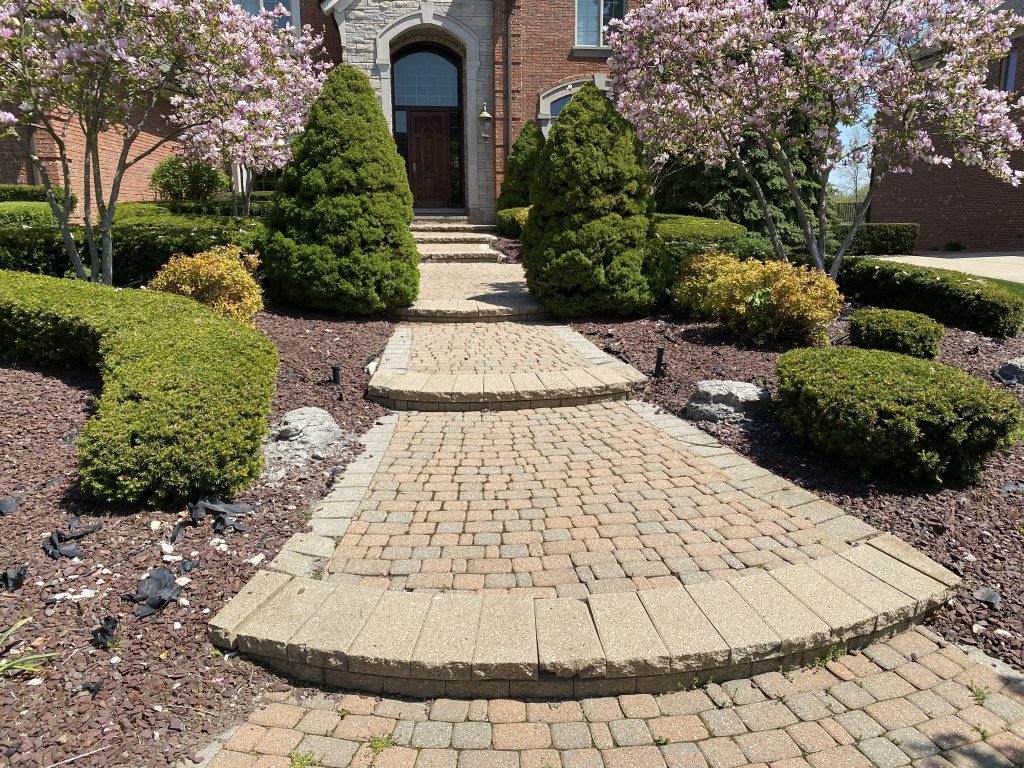
Signs an outdoor brick or paver repair may be worth evaluating
Not every blemish requires rebuilding. These are practical signs that the area deserves a closer look, especially when the condition is getting worse or affecting how the surface functions.
Uneven or rocking pavers. Units that move underfoot, form low spots or create a trip edge may need to be lifted and reset.
Open or deteriorating mortar joints. Cracking, gaps or crumbling mortar can allow more water into masonry joints and accelerate deterioration.
Chipped, cracked or spalled brick. Surface loss or broken units can be cosmetic, but repeated deterioration can justify selective replacement.
Settled steps or entry areas. A step or landing that has shifted can affect appearance, drainage and safe everyday use.
Recurring low spots and puddling. Water collecting in the same area can signal settlement or grading conditions that should be considered before resetting materials.
Loose wall caps or displaced landscape-wall units. Localized movement may be repairable, while widespread leaning can point to a larger wall issue.
Edges spreading or pavers migrating. When perimeter support is no longer doing its job, the surface can slowly open up and lose alignment.
Repairs that keep failing. If the same spot has been patched more than once, the next estimate should look beyond the visible crack or loose unit.
Verified outdoor scope
What Blackstone can evaluate and repair
Brick & Paver Surfaces
Localized paver lifting and resetting, replacement of damaged units where suitable materials are available, repairs to brick-paver patios and walkways, and corrections to small areas that have become uneven or separated.
Steps & Entry Hardscapes
Eligible brick, paver, stone or masonry step repairs when the work fits Blackstone’s landscape/hardscape scope. The estimate should separate surface repair from conditions that require structural or specialty building work.
Mortar Joints
Mortar-joint repair, repointing or tuckpointing where appropriate to the specific outdoor masonry feature. The existing material, joint condition and surrounding masonry should guide the repair rather than a one-size-fits-all mortar recipe.
Landscape & Retaining Walls
Repair or rebuilding of eligible landscape-wall sections, loose caps and displaced units. If the wall is leaning significantly or holding back a substantial grade change, the project may need a broader retaining-wall evaluation.
Patio & Walkway Restoration
Repair can be coordinated with a larger patio or walkway refresh when resetting a problem area alone would leave the surrounding hardscape mismatched, worn or functionally compromised.
Material Replacement
Selective brick, paver or stone replacement when damaged units cannot reasonably be reused. Blackstone can look for a close match, but age, weathering and discontinued product lines can make exact matching impossible.
About structural masonry: Blackstone’s brick-repair service on this page is focused on eligible outdoor landscape and hardscape features. Structural foundation repair, load-bearing building-wall repair, chimney work, façade anchoring, waterproofing and engineering are not represented here as Blackstone services.
Michigan conditions
Freeze-thaw, settlement, drainage and wear all leave different clues.
Southeast Michigan’s seasonal temperature changes can be hard on outdoor masonry because water can enter joints or supporting materials and then expand when it freezes. That does not mean every crack was “caused by frost,” but repeated wetting and freezing can make an existing weakness more visible over time.
Settlement can also change a paver surface’s grade. A small depression may be localized, while wider low spots can suggest a larger base or drainage issue. Downspout discharge, runoff and erosion may influence what happens beneath a walkway or patio.
Steps and walkways also wear from repeated use. A useful repair plan separates ordinary wear from ongoing movement so a cosmetic patch is not used where a reset or rebuild is needed.
What an estimate should look at
• Which material is moving or deteriorating?
• Is the condition isolated or spread across the feature?
• Is water collecting, discharging or washing through the area?
• Can existing brick or pavers be reused?
• Is the edge, base or adjacent grade contributing?
• Would repair blend reasonably with the surrounding material?
• Is this truly a Blackstone hardscape project, or does a structural specialist need to be involved?
Know the difference
Brick repair, paver repair and retaining-wall repair are not the same job.
Mortared Brick or Masonry
When units are held together by mortar, the joint itself may be part of the repair. Loose or deteriorated mortar can require removal and replacement with a compatible repair mortar. On older masonry, strength, color and joint profile matter. The National Park Service’s guidance on repointing is a useful technical reference for understanding why compatibility matters, even though Blackstone’s page is focused on outdoor landscape features.
Interlocking Pavers
Pavers are individual units installed as a system. When a section settles, the better solution may be to lift reusable pavers, correct the affected supporting area and reset the surface rather than patch it like poured concrete. Joint condition, edge restraint, drainage and adjacent grade can all affect the result.
Retaining & Landscape Walls
A retaining wall has a different job because it holds back soil. A loose cap is not the same problem as a leaning wall. Repairs should account for the wall’s height, movement, drainage and the extent of the affected section. Larger or more complex walls may require replacement or additional design review rather than a simple reset.
Repair or replace?
Keep what is serviceable. Replace what is no longer helping the system.
Repair is usually most attractive when the problem is localized, the surrounding hardscape is in good condition and enough existing material can be reused. A small group of settled pavers, a limited mortar-joint area or a few damaged units may not justify tearing out an otherwise sound feature.
Replacement becomes more practical when movement is widespread, many units are damaged, drainage is poor or the same area keeps failing. A partial rebuild can be the middle ground: preserve what is performing well and reconstruct what is not.
The estimate should explain the recommended direction and why, so a small repair is not used where the surrounding condition makes it unlikely to hold up.
Simple process
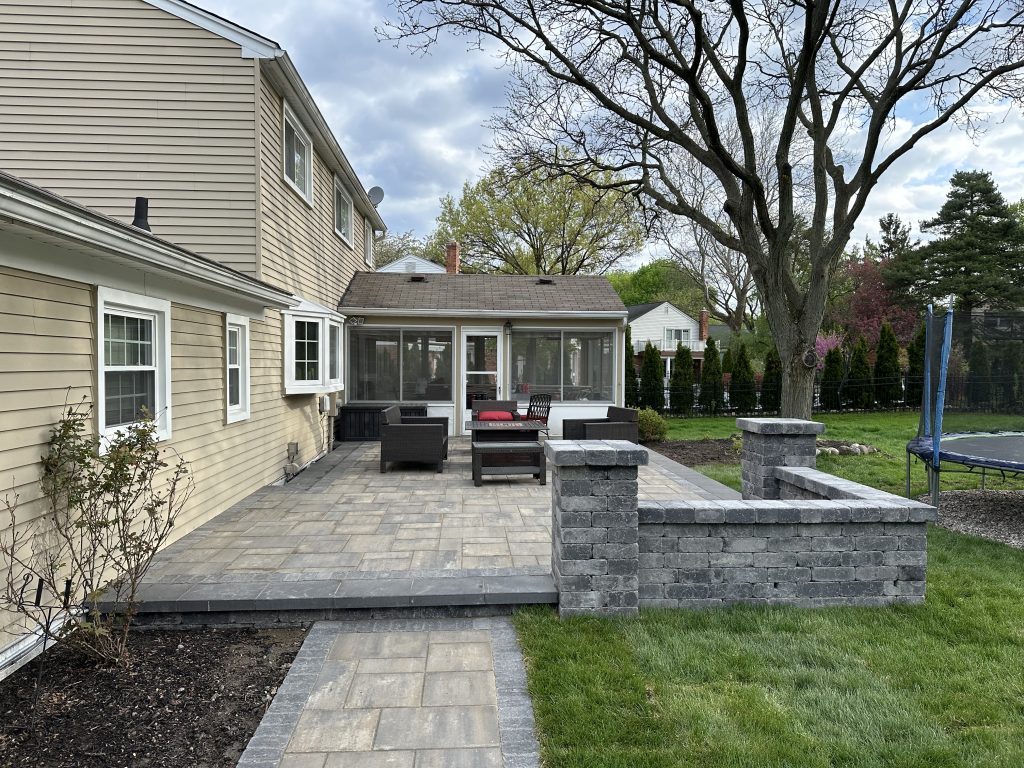
From first look to a repair recommendation
Share the problem
Send the property location, identify the feature and describe what changed. Photos are useful for showing settled areas, cracked units or deteriorating joints.
Confirm project fit
Blackstone determines whether the work fits its outdoor brick, paver, step or landscape-wall repair scope. Structural building concerns should be referred to the appropriate specialist.
Review on site
When an on-site visit is appropriate, the affected area, surrounding grade, material condition and visible drainage patterns can be reviewed before repair options are discussed.
Choose repair or rebuild
The proposal should identify the intended scope, material reuse or replacement, and whether a localized repair, partial rebuild or larger replacement is the recommended direction.
Matching existing materials
A close match is a realistic goal. An “exact match” is not a promise.
Older brick, stone and paver products change as they weather. Sun, moisture, deicing materials, cleaning and previous sealers can all affect appearance. Manufacturers also discontinue colors, textures and sizes. When repair requires new material, Blackstone can evaluate available options and try to blend the repair with the existing feature, but the proposal should never guarantee a perfect color match. Reusing sound existing pavers can sometimes produce the most natural blend, while replacement units may be placed where slight variation is less noticeable.
Northville trust block
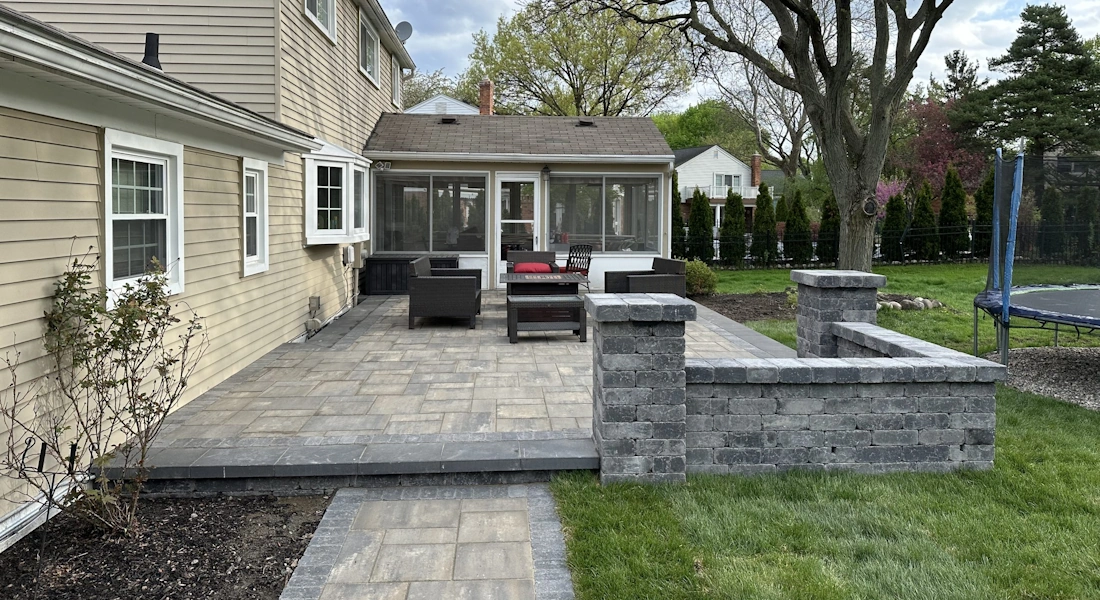
Blackstone Landscaping in the Northville area
Northville is Blackstone’s first-priority service market. The verified Google business listing shows a 4.8 rating from 32 reviews and the current phone number (248) 939-3600.
Important: Blackstone’s website lists P.O. Box 824, Northville, MI 48167 for mail. Do not describe that P.O. Box as a customer walk-in storefront.
Plymouth is next
Brick and paver repair for Plymouth properties
Plymouth is Blackstone’s second primary service market and should be treated as a major service area on this page, not buried in a county list. The company’s current site already has substantial Plymouth hardscape content, including brick repair and paver pages, so this rebuilt page should become the broad service authority while the Plymouth-specific page supports localized intent.
Do not create or imply a Plymouth office or Google Business Profile unless one is separately verified. The project location and service type should determine availability. Nearby communities can be mentioned after Northville and Plymouth, but the page should not drift into a giant Southeast Michigan city list that weakens the two markets being prioritized.
Northville Landscaping Services
Plymouth Landscaping Services
View Service Areas
Nearby project coverage
Northville first. Plymouth second. Nearby Southeast Michigan as availability allows.
Blackstone’s current service-area hub centers the business on Northville and Plymouth and says select nearby projects may be accepted depending on location, scope, service type, season and schedule. Keep the local hierarchy clean: Northville, Plymouth, then nearby communities such as Novi, Livonia, Canton, Farmington, Farmington Hills, South Lyon, Wixom and Salem Township when relevant to actual project availability.
Related hardscape services
Repair the existing feature, or plan the larger outdoor improvement.
Brick & Patio Pavers
For new paver surfaces, additions and larger patio upgrades.
Walkways & Steps
For new or rebuilt entries, paths and step systems.
Retaining Walls
For larger wall repairs, replacement and new landscape walls.
Project Portfolio
See authentic Blackstone patios, walkways, walls and landscape work.
Brick repair FAQs
Questions homeowners ask before repairing brick and pavers
What types of brick repair does Blackstone Landscaping handle?
Blackstone’s verified outdoor scope includes eligible brick and masonry repairs tied to patios, walkways, steps, paver surfaces, retaining walls and other landscape hardscape features. Mortar-joint repair, repointing or tuckpointing may also fit. Structural foundation, façade, chimney, waterproofing and engineering work are not represented here as Blackstone services.
Can uneven brick pavers be repaired without replacing the whole patio or walkway?
Often, yes. If the pavers are reusable and the problem is localized, affected units may be lifted and reset after the supporting area is addressed. Widespread movement, damaged materials or a larger underlying problem can make partial or full replacement more practical.
Why do brick pavers and outdoor masonry move in Michigan?
Freeze-thaw cycling, water movement, settlement, erosion, edge failure and ordinary wear can all contribute. The repair should address the visible condition and, where practical, the reason the area moved rather than simply making it look level for a short time.
Does Blackstone offer mortar repair or tuckpointing?
Blackstone’s current website lists mortar repair and tuckpointing/repointing. The exact method depends on the masonry, joint condition and location. Material compatibility matters, especially on older masonry.
Can new brick, pavers or mortar be matched exactly to the existing material?
A close match may be possible, but an exact match should not be promised. Existing materials weather and change color, and older products may be discontinued. The estimate should identify what can be reused and which replacement options are realistically available.
How do I know whether a retaining wall needs repair or replacement?
Localized loose units, caps or settlement may be repairable. Significant leaning, widespread movement, drainage pressure or loss of support can point toward a larger rebuild because a retaining wall is doing more than providing a finished surface.
Do you provide brick repair in both Northville and Plymouth?
Yes. Northville and Plymouth are Blackstone Landscaping’s primary service markets. Nearby Southeast Michigan projects may also be considered based on project type, location, season and current availability.
What happens when I request a brick repair estimate?
Share the property location, the damaged feature and what you are seeing. Photos can help. Blackstone can confirm project fit and, when appropriate, review the area on site before recommending repair, partial replacement or rebuilding.
Start with the damaged area
Need brick, paver, step or landscape-masonry repair in Northville or Plymouth?
Tell Blackstone what is moving, cracking, loosening or wearing out. The team can confirm whether the project fits its hardscape repair scope and explain whether repair, partial rebuilding or replacement is the practical next step.